
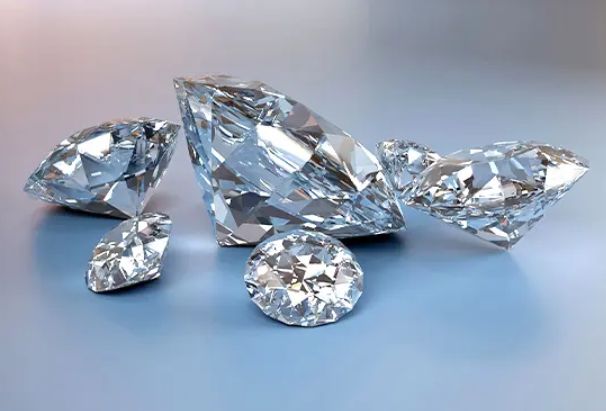
The Illusion of a Fixed Price
When people think about diamonds, the first instinct is often to assign a number. What is it worth? How much can it be sold for? These questions feel straightforward, yet they rarely have simple answers.
Unlike commodities with standardized pricing, diamonds exist in a space where value is shaped by multiple layers. While market trends and grading reports provide a foundation, they do not fully define worth. Two diamonds with similar specifications can differ significantly in how they are perceived—and ultimately, how they are valued.
This is because a diamond is not just measured; it is experienced.
Beyond the Four Cs
The traditional framework of cut, clarity, color, and carat weight offers a structured way to evaluate diamonds. These metrics create consistency within the industry and help establish a baseline for comparison.
However, they do not capture everything. They cannot fully explain why one diamond feels more vibrant than another, or why a smaller stone may appear more balanced than a larger one. The interaction between these attributes—how they work together rather than individually—is what shapes the overall impression.
Value, in this sense, is not simply the sum of measurable parts. It is the result of how those parts interact.
The Role of Perception
Perception plays a central role in determining value. Light performance, for example, is influenced by subtle variations in proportion and symmetry. These differences may not always be reflected in grading reports, yet they significantly affect how a diamond appears.
A diamond that handles light with consistency and control often feels more refined, even if its technical specifications are similar to others. This perception cannot be reduced to a single number. It emerges from experience—how the diamond behaves in different environments, under different conditions, and from different angles.
This is why pricing cannot be entirely objective. It must account for both measurement and perception.
Why Evaluation Requires Interpretation
Understanding a diamond’s true value requires more than reading a report. It requires interpretation. Each attribute must be considered in relation to the others, creating a complete picture rather than a fragmented one.
This is where a professional diamond evaluation becomes essential. It bridges the gap between technical data and real-world experience. Instead of focusing solely on individual characteristics, it considers how those characteristics interact to create overall presence and balance.
This approach provides a deeper understanding of value—one that goes beyond numbers and into meaning.
Market Value vs. Personal Context
Market value is influenced by external factors such as demand, supply, and economic conditions. These factors fluctuate over time, affecting pricing in ways that may not reflect the intrinsic qualities of the diamond.
At the same time, personal context also plays a role. A diamond may carry significance that extends beyond its market value. It may represent a moment, a relationship, or a period of life that cannot be quantified.
When these two perspectives—market and personal—intersect, value becomes more complex. It is no longer just about what the diamond is worth in the market, but what it represents to the individual.
The Subtle Influence of Craftsmanship
Craftsmanship is another factor that shapes value, often in ways that are not immediately visible. The way a diamond is set, the balance of the design, and the quality of the construction all influence how the stone is perceived.
A well-crafted setting enhances the diamond’s presence, allowing it to perform at its best. A poorly executed one can limit its potential, even if the stone itself is of high quality.
This relationship between craftsmanship and perception highlights the importance of evaluating the diamond as part of a complete system, rather than in isolation.
Why Transparency Builds Confidence
Clarity in evaluation leads to confidence in decision-making. When individuals understand how value is determined, they are better equipped to assess their options.
Transparency is key. It involves explaining not just the outcome, but the reasoning behind it. Why is the diamond valued in a certain way? What factors are influencing the price? How do these factors interact?
When these questions are answered clearly, the process becomes less about uncertainty and more about understanding.
The Difference Between Price and Worth
Price is a number assigned at a specific moment. Worth is a broader concept. It includes perception, context, and meaning.
A diamond may have a certain price in the market, but its worth can vary depending on how it is experienced. This distinction is important because it shifts the focus from comparison to understanding.
Rather than asking whether a price is high or low, the question becomes whether it reflects the complete picture.
Seeing Value as a Whole
In the end, a diamond’s value cannot be reduced to a single metric. It is the result of multiple elements working together—technical attributes, craftsmanship, perception, and context.
Understanding this complexity allows for a more accurate and meaningful evaluation. It moves beyond numbers and into a deeper perspective, where value is seen as a complete picture rather than a simplified figure.
When Understanding Replaces Assumption
The most important shift occurs when assumption is replaced with understanding. Instead of relying solely on numbers, individuals begin to see how value is constructed.
This shift leads to better decisions. It creates confidence, reduces uncertainty, and ensures that the outcome feels aligned with both expectation and reality.
Because in the world of diamonds, true value is not something that can be fully captured by a number—it is something that must be understood.